
Damp, mould and rain getting in · Can wait
Bathroom mould that returns: investigate the moisture
General guidance for Singapore condo residents. Follow current official advice and confirm arrangements for your own building.
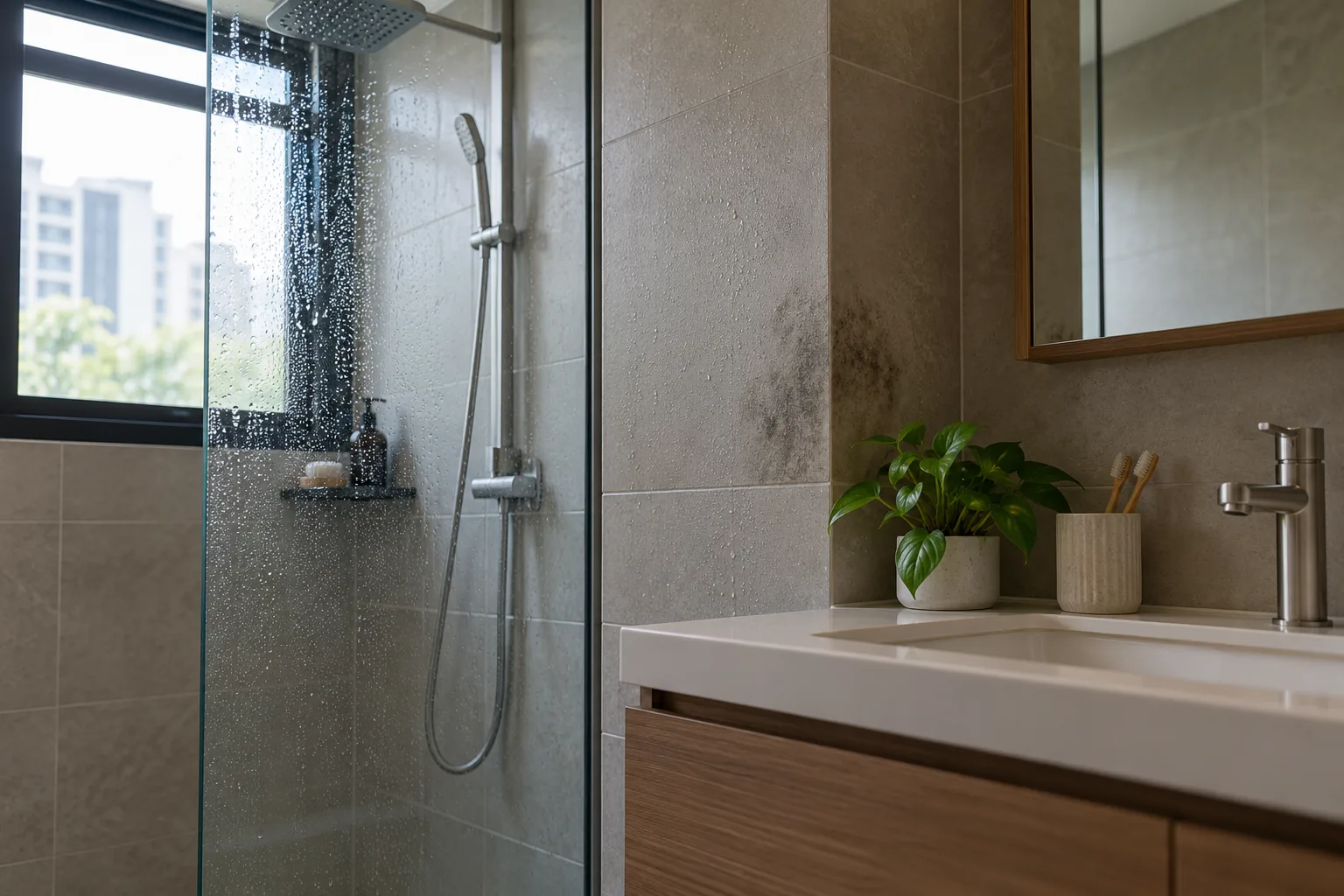
Start with the dampness
EPA identifies moisture control as essential: cleaning without fixing the water problem is likely to leave mould returning. Record when the patch appears, whether it follows rain or showers, and any dripping or soft finishes. Its colour does not identify the species or tell you how it will affect someone.
Decide when to get professional help
EPA treats about ten square feet, roughly 0.9 square metres, as one consideration in deciding who should clean. It is US guidance, not a Singapore legal limit or a guarantee that a smaller patch is safe for DIY. Major water damage, sewage, hidden growth or suspected contamination in air-conditioning need experienced assessment. Do not run an HVAC system known or suspected to be mould-contaminated.
Do not turn access into another hazard
Do not stand on a toilet or basin or open a false ceiling to investigate. People with asthma, lung conditions or immune suppression should avoid mouldy areas and seek advice rather than doing cleanup. CDC's post-severe-weather guidance specifically cautions these groups about entering affected buildings.
Clean only a suitable accessible surface
For a small sound hard surface, EPA recommends detergent and water followed by full drying. Porous or damaged materials may need replacement. Follow product instructions and suitable protective-equipment guidance; respirator fit matters. Never mix bleach with ammonia or other cleaners. Do not paint or seal over mould before cleaning and drying.
Report and follow up
Send your landlord or management the location, date, safe photographs and recurrence pattern without assigning blame. Ask what investigation will find the moisture source, which materials need treatment and what follow-up is included. Ventilate when outdoor conditions and safety allow. EPA advises drying water-damaged areas promptly, within twenty-four to forty-eight hours, to help prevent growth; that is not a guarantee that established mould has gone. Reopen the report if dampness or growth returns.
Find your building's management office
Every building in the estate.sg directory lists its management office's number and address.